 Jaipur Handloomia
Jaipur Handloomia
Jaipur Handloomia
28 Jul 2026
Co-ord sets and kurta sets sit next to each other in most Indian wardrobes, and on a shop rail they can look like the same thing: a matching top and bottom, usually in cotton, usually printed. They aren't. They're cut differently, they suit different body shapes and occasions, and they age differently. Here's how to tell which one you actually want.
The short answer
Choose a kurta set if you want a traditional silhouette with the most coverage and the widest formal acceptance. Choose a co-ord set if you want something lighter and more modern that can be broken up and worn as separates. If you're buying your first piece and want maximum wear out of it, the co-ord is usually the more flexible purchase.
What actually differs
A kurta set centres on the kurta — a long tunic, typically falling somewhere between the knee and the ankle, worn over churidar, palazzo or straight pants, usually with a dupatta. The proportions are fixed: long top, narrower bottom.
A co-ord set is defined by the matching, not the length. The top is usually shorter — around hip length — and it's paired with a bottom in the same fabric and print. Ours are cut as a sleeveless top with wide-leg bottoms, plus a separate pair of 3/4 sleeves you can attach or leave off.
That difference in top length changes everything else. A long kurta hides the waist and the hips. A shorter co-ord top shows where your waist is, and the wide-leg bottom balances it. Neither is better — they're just different shapes, and most people find one of them more comfortable to be seen in.
Comfort and climate
For Indian summers, a cotton co-ord generally wins. Less fabric, more airflow, and a sleeveless option on the hottest days. A full-length kurta over churidar is two layers over your legs; wide-leg bottoms are one, and loose.
Kurta sets have the advantage in cold weather and in situations where you want full coverage without thinking about it — long travel, conservative settings, places of worship. A co-ord can get there too, but you need the sleeves and usually a dupatta, which is a decision rather than a default.
Occasions
Kurta sets are the safer choice for formal traditional occasions, office environments with a conservative dress code, and family functions where you'd rather not stand out. Nobody has ever been underdressed in a well-made kurta set.
Co-ord sets are stronger for daytime functions, brunches, travel, casual office settings and daytime wedding events like mehendi and haldi, where guests sit on the floor for hours and comfort matters more than formality. With a dupatta and proper jewellery, a printed cotton co-ord reads as festive without the weight of heavy work.
Versatility — the real deciding factor
This is where co-ord sets pull ahead, and it's the argument most people don't consider at the point of buying.
A kurta set is mostly one outfit. The kurta can be worn with other bottoms, but the churidar or palazzo rarely goes anywhere on its own, and the pieces are cut to be seen together.
A co-ord set is two garments that happen to match. The printed top works with jeans or plain trousers. The wide-leg bottoms work with a solid tee or a plain kurta. Buy one co-ord and you've added three or four outfits to your wardrobe, not one. For a first purchase, or for a small wardrobe, that matters.
Fit and sizing
Kurta sets are more forgiving. The length hides a lot, and the fit is loose almost everywhere.
Co-ord sets need a slightly more considered fit at the top, because the shape is visible. Our sets run in sizes 38 to 44, measured across the bust in inches. Take the size closest to your own bust measurement, and size up if you prefer a relaxed drape — cotton has very little give, so a close fit stays close. The bottoms are elasticated at the waist and much more forgiving than the top.
Cost and longevity
Both are comparable to buy. The difference shows over time. A heavily embroidered kurta set has more to go wrong: threadwork catches, sequins come loose, and dry cleaning becomes compulsory. A printed cotton co-ord can be hand washed at home, and good cotton softens with use rather than degrading.
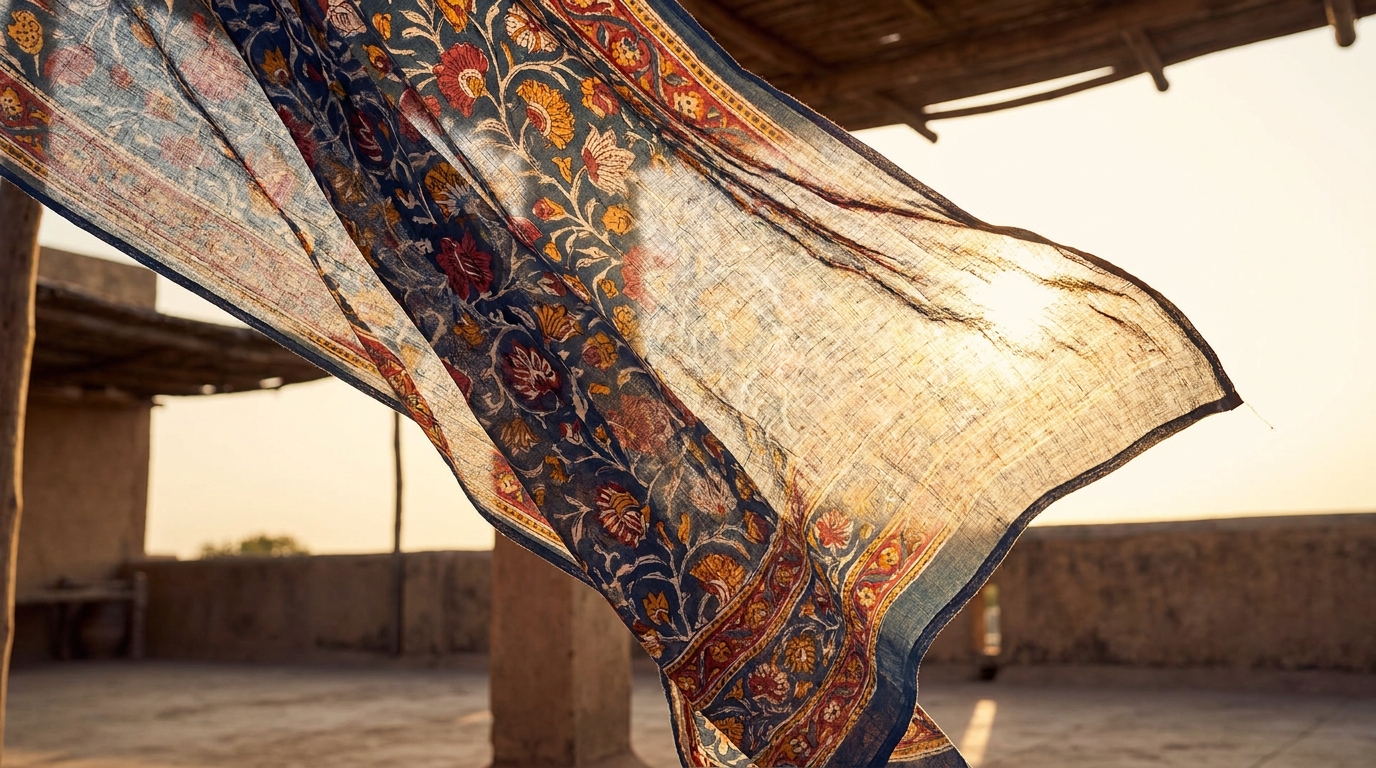
If the print is a discharge print — where the colour is removed from dyed fabric rather than printed on top of it — the pattern is part of the cloth itself, so it won't crack or peel with washing the way a surface print eventually will.
So which should you buy?
Buy the kurta set if you need traditional formality, maximum coverage, or you simply prefer a long silhouette.
Buy the co-ord set if you want something cooler to wear, easier to wash, and able to be split into separates you'll use more often than you expect.
And if you're genuinely torn: the co-ord will get worn more days of the year. That's usually the honest tiebreaker.